How Often Should You Clean Travertine?
There’s no single cleaning schedule for travertine. How often you clean it depends on foot traffic, where it is installed and how quickly dirt builds up.
A good routine is:
-
- Daily or as needed: Wipe up spills and remove loose dirt in kitchens, entryways and other high-traffic areas. Daily cleaning does not mean mopping the whole floor every day.
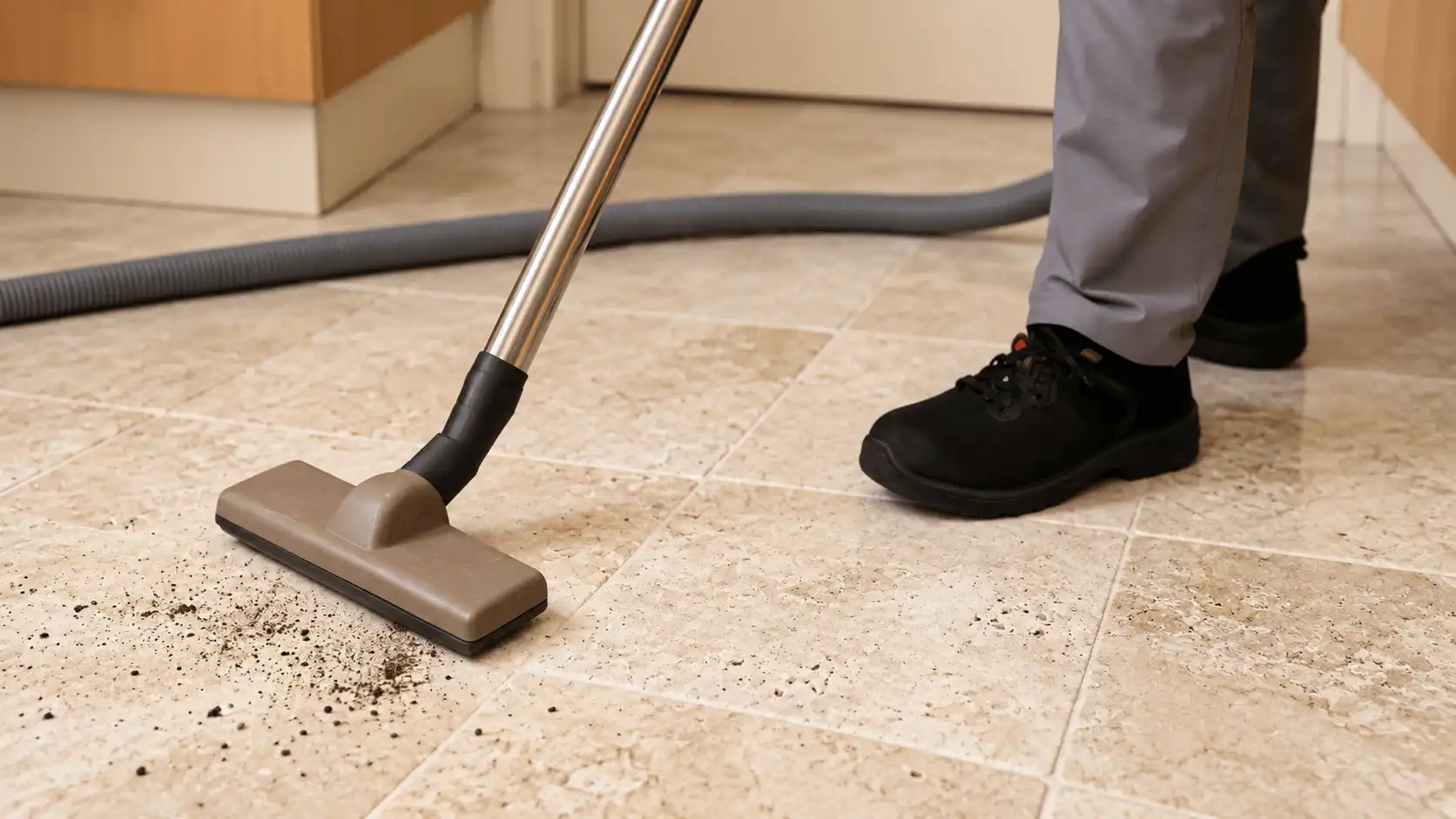
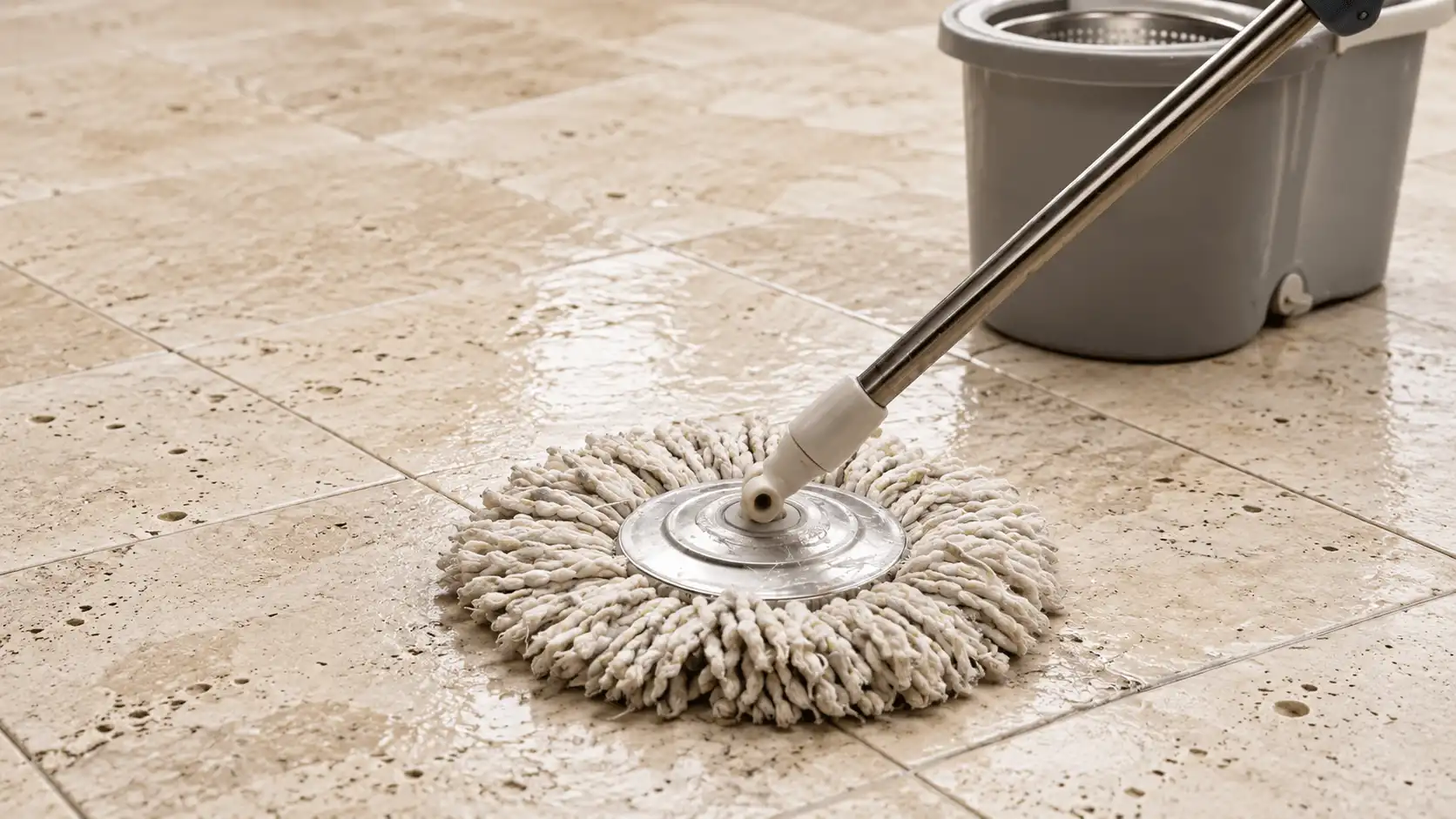
- Weekly: Sweep or vacuum the floor, then use a damp mop with a pH-neutral cleaner when needed.
- Periodically: Give grout lines, textured areas and outdoor travertine a deep cleaning when grime starts to build up.
Travertine floor tiles in busy areas may need attention more often, while a low-use bathroom floor or guest room may need less.
The best guide is the surface itself: clean it before grit, grime or spills have time to settle in.
What Should You Avoid When Cleaning Travertine?
Acids, abrasive tools and unsuitable cleaning products can damage travertine. When in doubt, choose a cleaner made specifically for natural stone and test it on an inconspicuous area first.
| Avoid |
Why |
| Vinegar, lemon juice and citrus cleaners |
Acids react with the calcium carbonate in travertine and cause etching, which is permanent damage rather than a stain |
| Acidic bathroom, shower and grout sprays |
Some bathroom, shower and grout cleaners contain acids that can etch or dull travertine. |
| Bleach and ammonia |
Discolours the stone and breaks down sealers |
| Harsh cleaners and general-purpose cleaners |
Many contain acids, bleaches or additives that dull the finish or degrade the sealer |
| Abrasive powders and creams |
These can scratch or dull the finish. |
| Steel wool and scouring pads |
These can scratch the surface, most visibly on polished travertine |
| Steam mops |
High heat and moisture can break down the sealer and force water into the pores |
The safest rule is simple: avoid acidic and abrasive products, and check that any cleaner you use is suitable for travertine or other natural stone surfaces.
How to Remove Stains From Travertine Tiles
Travertine can absorb spills because of its porous nature, so the sooner you act, the better. Most stain removal is straightforward if you catch the spill early.
For fresh spills, blot immediately with a soft cloth or clean towel. Avoid rubbing, as this can spread the liquid and push it further into the stone.
| Type of stain |
What to do |
| Coffee, wine and acidic drinks |
Blot immediately rather than rubbing. Clean with a stone-safe cleaner and rinse well. Keep in mind that acidic drinks can cause etching as well as staining. |
| Oil and grease |
Blot up as much as possible. For a dark stain that has soaked in, use a natural-stone poultice or suitable oil stain remover. |
| Mould, mildew and soap scum |
In a travertine shower or wet area, use a stone-safe cleaner approved for natural stone and scrub gently with a soft-bristle brush. |
| Deep or set-in stains |
Use a stone poultice made for natural stone to help draw the stain out of the pores. Follow the product instructions, test it on an inconspicuous area first, and repeat the treatment if needed. |
How to Clean Outdoor Travertine Tiles and Pavers
Outdoor travertine is exposed to leaves, dirt, pool water and organic build-up, so it usually needs more frequent rinsing and brushing than indoor stone.
-
- Sweep away leaves, grit and loose debris first.
- Rinse with clean water.
- Use a pH-neutral cleaner made for natural stone when a deeper clean is needed.
- Work mould, algae and stubborn grime gently with a soft-bristle brush.
- Around pools, rinse the surface with fresh water regularly to reduce salt and residue build-up.
- Treat rust or oil marks with a stone-safe stain remover rather than an acidic outdoor cleaner.
Does Travertine Need to Be Sealed?
Yes. Sealing travertine helps reduce liquid absorption and gives you more time to deal with spills before they penetrate the stone.
A good penetrating sealer can:
-
- Reduce liquid absorption
- Give you more time to clean up spills
- Help prevent staining
- Make ongoing cleaning easier
Sealing does not make travertine stain-proof, and it will not prevent etching from acidic substances.
Check With a Water Test
A simple water test can help you see whether the sealer is still doing its job.
Place a few drops of water on the travertine and leave them for 10 to 30 minutes. Wipe the water away and look at the stone. If it has darkened where the water sat, the sealer has worn through and it is time for re-sealing.
Travertine typically needs resealing every one to four years, depending on traffic and exposure. Use the water test rather than the calendar as your guide, and follow the sealer manufacturer’s recommended reapplication period
5 Tips for Travertine Tile Maintenance
Travertine can be polished, honed or tumbled, and it may also be filled or unfilled. These differences affect where dirt collects and how easily marks show, so a few small changes to your cleaning method can make a difference.
Tip 1: Be Extra Gentle With Polished Travertine
Polished travertine has a smooth, reflective finish, so scratches, dull patches and etching tend to stand out more.
Use a soft cloth or microfibre mop, and avoid abrasive pads or heavy scrubbing that can reduce the shine.
Tip 2: Keep Honed Travertine Simple
Honed travertine has a smooth, matte finish that hides minor marks better than polished stone, but it still needs gentle care.
Avoid harsh chemicals. Use a pH-neutral cleaner and soft cleaning tools, then rinse and dry the surface properly to avoid residue.
Tip 3: Brush Tumbled Travertine Where Dirt Collects
Tumbled travertine has a more textured, aged finish, so dirt can settle into the uneven surface and edges.
Use a soft brush to loosen built-up dirt, then scrub gently before rinsing with clean water.
Tip 4: Pay More Attention to Unfilled Travertine
Unfilled travertine keeps its natural holes and pits, which can collect dust, grit and debris over time.
Remove loose dirt first, then use a soft-bristle brush to clean inside the deeper areas that a mop may not reach.
Tip 5: Check Filled Areas While You Clean
Filled travertine has its natural holes filled to create a smoother surface, which makes routine cleaning easier.
As you clean, check for filler that has cracked or worn away. Avoid aggressive brushing around damaged areas, as this can make the problem worse.
Keep Your Travertine Looking Good for Years
Travertine does not need a complicated maintenance routine. It comes down to four habits:
-
- Keep grit off the surface
- Clean with a pH-neutral stone cleaner
- Deal with spills quickly
- Run a water test once a year, and reseal if the stone darkens
If you’re planning a new project, see our travertine tiles for indoor spaces and travertine pavers for patios, pool surrounds and outdoor areas.
Prefer the same natural stone look with less maintenance? Our travertine-look tiles offer a similar appearance with the everyday practicality of porcelain.
FAQs About Cleaning Travertine Tiles
Is travertine high maintenance?
Less than most people expect. Sweep and mop regularly with the right cleaner, and reseal when the water test says it’s needed. The weekly cleaning routine takes about as long as any other floor. The main difference is what you clean it with, not how often.
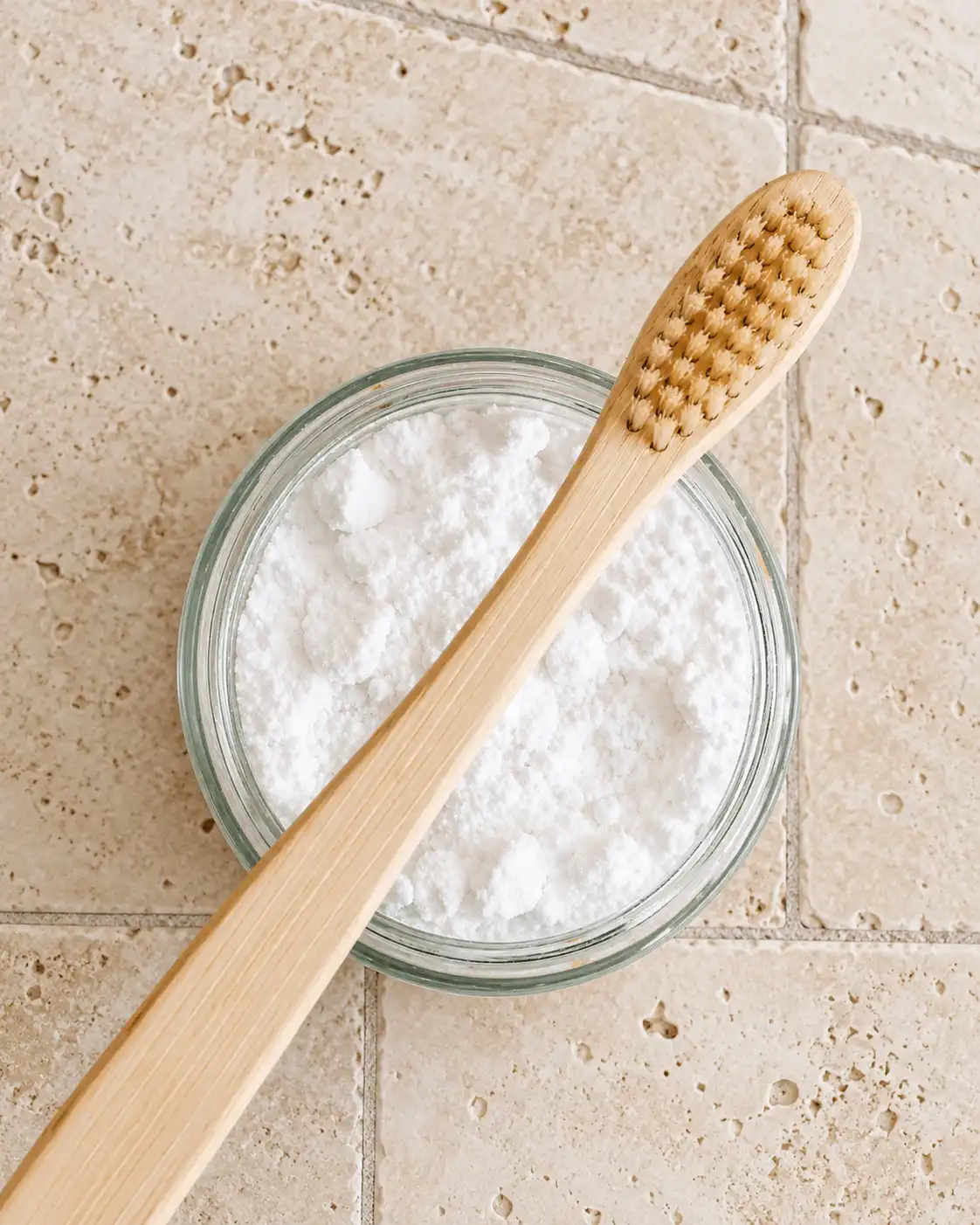
Can you use baking soda on travertine tiles?
Baking soda is mildly abrasive, so it is not ideal for regular cleaning.
It may be used in some stone poultice treatments, but only where the product or stone-care instructions recommend it. Test any treatment on an inconspicuous area first.
Can you steam clean travertine tiles floors?
Steam cleaning travertine floors is generally best avoided unless the stone and sealer manufacturer confirms it is suitable.
High heat and moisture may affect some sealers, filled areas or the stone’s finish. For routine care, a well-wrung microfibre mop with a pH-neutral cleaner is the safer option.
How do you clean travertine grout?
Use the same pH-neutral stone cleaner you use on the tiles.
Apply it to the grout lines, loosen dirt with a soft brush, then rinse with clean water and dry the area. Avoid acidic cleaners that are not approved for natural stone.
Can you pressure wash travertine pavers?
Yes, but use caution. Excessive pressure can affect the stone, grout, filler or sealer.
Use a lower-pressure setting and follow the stone or sealer manufacturer’s recommendations. For heavily soiled or damaged paving, a professional cleaner may be the safer option.
What should you do if travertine is etched?
Etching is surface damage rather than dirt or staining. It often appears as a dull, pale or rough patch after contact with an acidic substance.
Cleaning it more aggressively will not fix the problem. Depending on the damage, the stone may need honing or polishing by a stone restoration specialist.
How do you make old travertine look new again?
Start with a thorough clean using a pH-neutral stone cleaner, then treat any stains and check the condition of the sealer.
If the surface still looks dull, scratched or uneven after cleaning, professional honing or polishing may be needed to restore the finish.
If you have other types of tiles that need cleaning, check out our guide to cleaning tiles for more practical tips.
What causes white powder on outdoor travertine?
White powdery deposits are often efflorescence. This occurs when moisture moves through the stone or surrounding materials and leaves mineral salts behind as it evaporates.
If it keeps returning after cleaning, the underlying moisture issue may need to be investigated.